
Something that made my heart sing:
Dear Granddaughter #1 was on the worship team this past Sunday. It was our annual Level Up NextGen Sunday and this year the youth took over worship. She sang harmony with the teen girls. She practices with her momma, who is the worship director of our church. These “big girls” did a phenomenal job worshiping and encouraging her too.
As Pastor Lindsay said, “When we dedicate babies, this is what it looks like years later.” I love it!

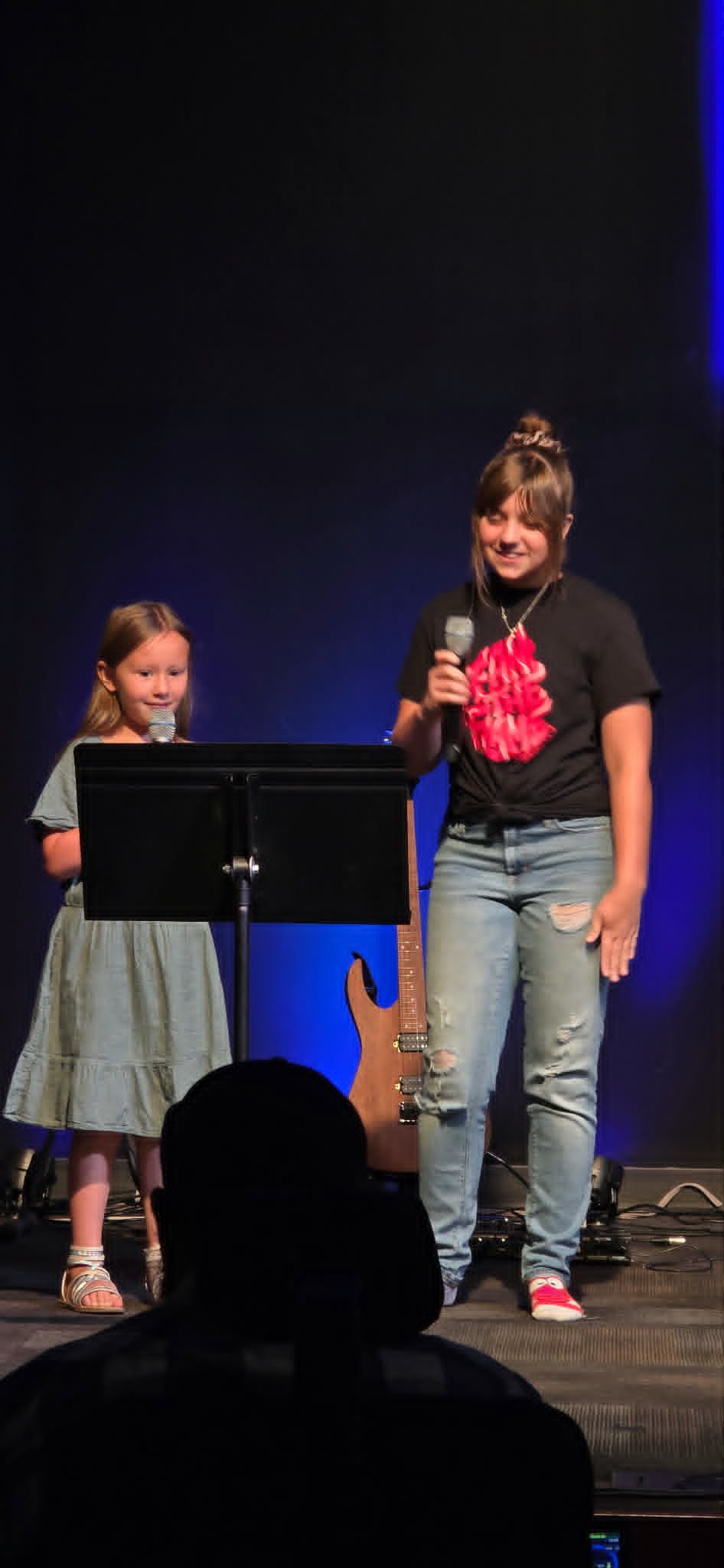
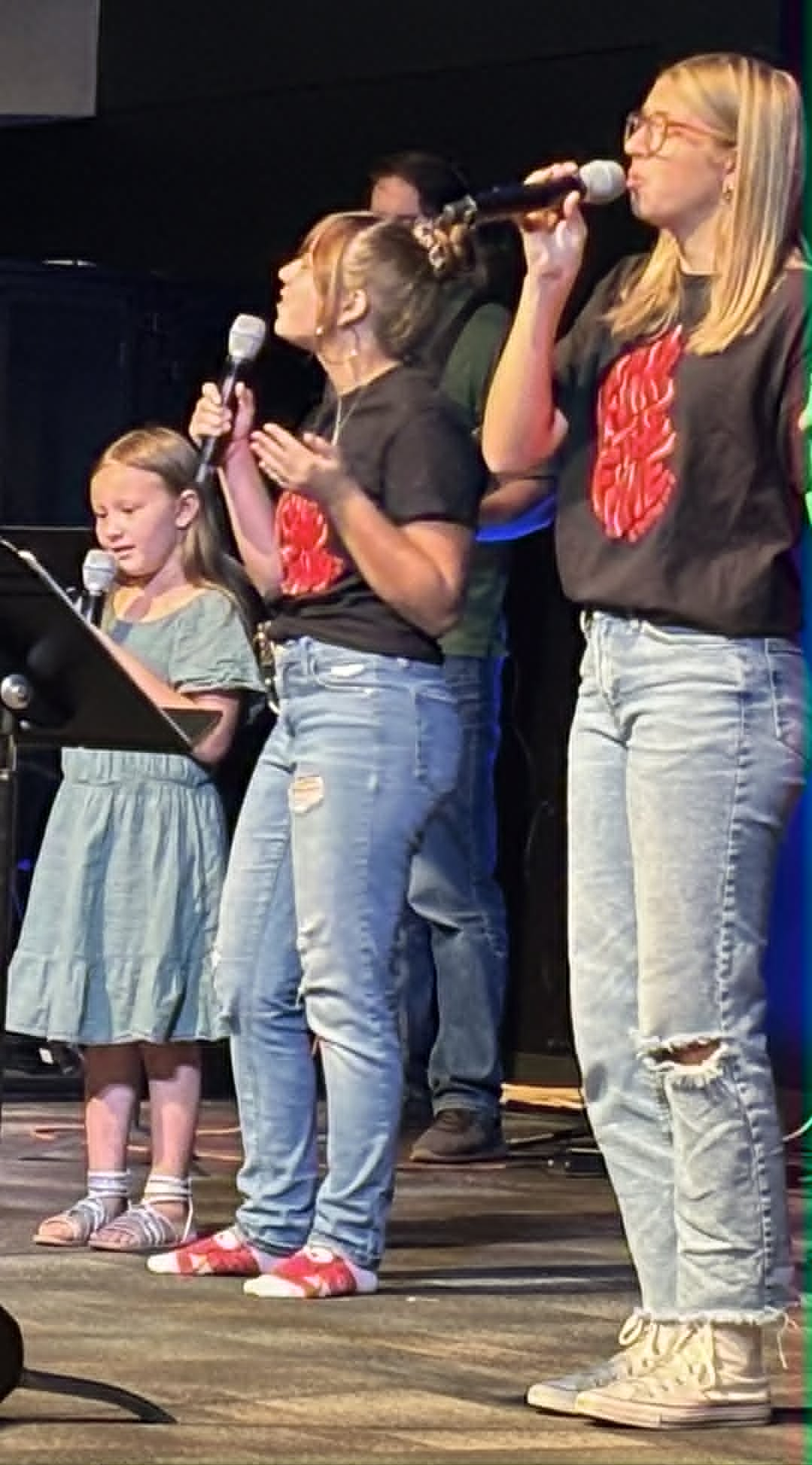
24 years ago, her momma stood on stage at a little Baptist church for a Christmas special and sang all by herself. I knew that day she was going to sing to the Lord for her whole life. I saw the same thing here.
A little something that make me laugh and smile:
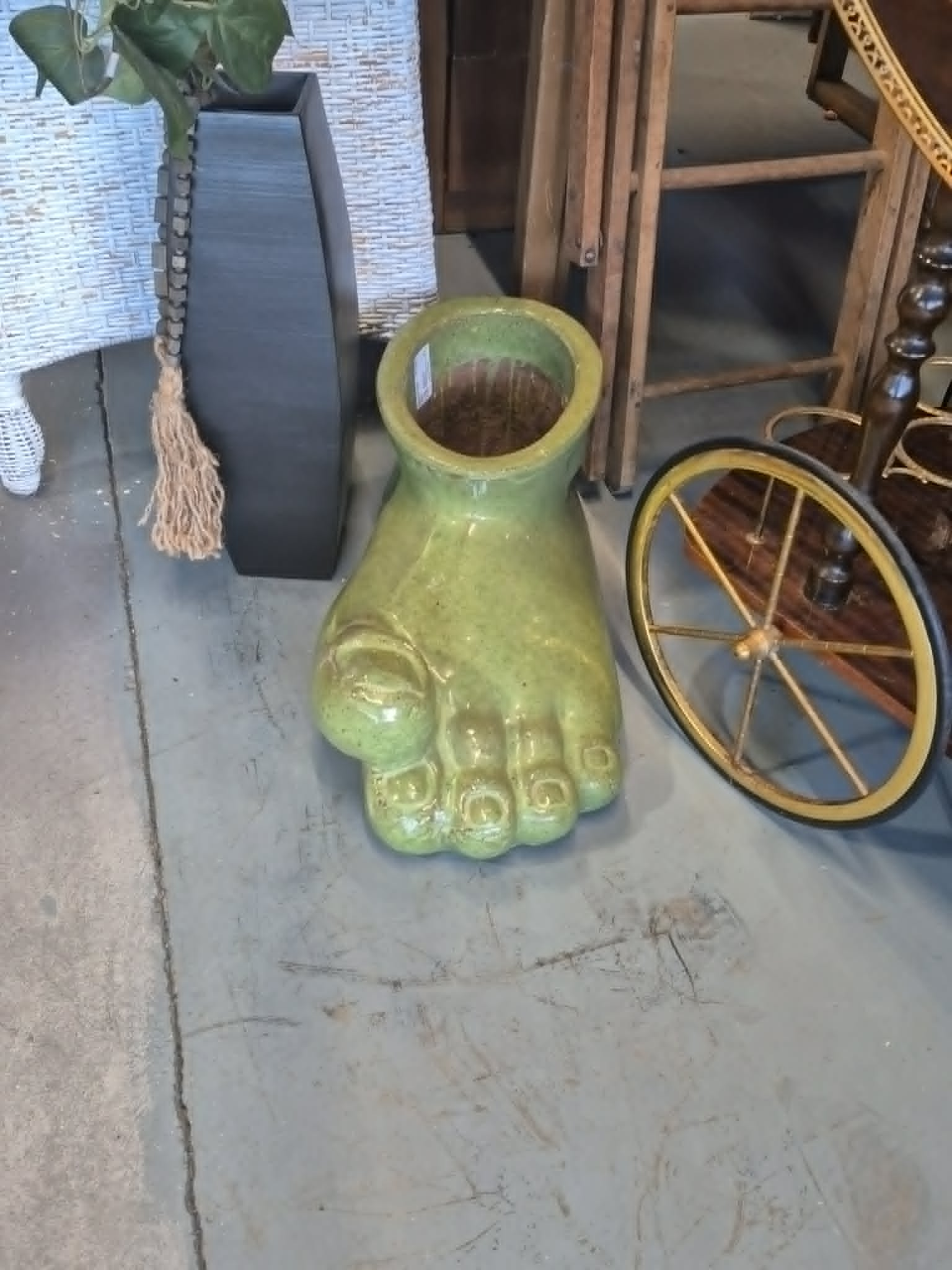
This “FOOT” planter was HUGE. I had to put my hand on it for scale.

A little digging on words:
Sometimes I have conversations with people and the conversation stirs me within and I will wake in the middle of the night or early morning hours and find myself on a discovery hunt on the topic.
Today’s topic: ALCOHOL
I wanted to look at the breakdown of the word — Al – Kuhl
But I was surprised by the meaning of that word. It is an Arabic term for dark powder. Now, I was thinking, how does that apply? Dark powder is the original meaning and later was used for words like — distillation, concentrated liquid, essense, distilled spirits, ethanol, and fermented beverage.
What is interesting is this word is the root word for painted eyes – Kohl – in this verse.
When Jehu came to Jezreel, Jezebel heard about it, so she painted her eyes, fixed her hair, and looked down from the window.
2 Kings 9:30
In the medieval times this definition of “fine powered” began to expand to mean anything extracted from another substance. To distill it down to its finer qualities and this included alcohol.
Biblically from Jeremiah 4:30 and Ezekiel 23:40 these painted eyes or face was representative of the nation’s effort to entice pagan nations into alliances.
In the case of Jezebel, she painted her face to use attraction, seduction, and deception on them rather than to repent of her actions.
So hold that thought… Let’s keep digging.
Many liken alcohol to strong drink like here in Proverbs.
Wine is a mocker,
Proverbs 20:1
Strong drink is a brawler,
And whoever is led astray by it is not wise.
But that word strong drink is Shekhar (and not Al-kuhl) meaning fermented drinks made of grain or fruit through a natural yeast fermentation.
Now the interesting part to me is that verse says strong drink is a brawler but in this verse in chapter 31 adds this.
Give strong drink to him who is perishing, (or sad)
Proverbs 31:6
And wine to those who are bitter of heart.
(or grieved in mind)
So there seems that strong drink has a positive and a negative side.
- Positive: strong drink lifts a sad heart and wine alleviates a grieved mind
- Negative: too much makes you a brawler and wine is a mocker
Wine is a mocker and subtly underminds a persons judgment leading to pride and contempt for wisdom. Strong drink leads to raging or being boisterous. It is the same word for roaring sea, chaotic crowd or loud clamor, and it produces aggressive uninhibited behavior. Both are central nervous system depressants and can become a toxic chemical to the body that destroys human reasoning, morality, and health.
The outcome of the negative …And whoever is led astray (deceived) by it is not wise.
There is that word again ‘deceived’ that we saw above where Jezebel used Kohl to paint her eyes to deceive.
DID YOU KNOW?
In the 19th century asylum doctors redefined drunkenness from "Moral Failure" to inebriety and called it alcoholism.
Drunkenness systematically disables human reasoning, exposes our secret vices, breaches social order, and invited divine judgment. In ancient literature drunkenness is refered to as the direct cause of moral degradation, leading to wild speech, financial ruin, and loss of self-control. I’ve seen that with my own eyes in our current times.
In the 1750’s, disorderly drunken conduct was by law connected to criminal conspiracy, treason, and a threat to civil law.
Proverbs again is not silent or absent in the understanding of this human reality of being deceived by drunkenness.
Who has woe?
Proverbs 23:29-35
Who has sorrow?
Who has contentions?
Who has complaints?
Who has wounds without cause?
Who has redness of eyes?
30 Those who linger long at the wine,
Those who go in search of mixed wine.
31 Do not look on the wine when it is red,
When it sparkles in the cup, When it swirls around smoothly; 32 At the last it bites like a serpent,
And stings like a viper. 33 Your eyes will see strange things, And your heart will utter perverse things.
34 Yes, you will be like one who lies down in the midst of the sea, Or like one who lies at the top of the mast, saying:35 “They have struck me, but I was not hurt; They have beaten me, but I did not feel it.
When shall I awake, that I may seek another drink?”
This describes someone who has lost their boundaries, incurs physical injury, and has a total loss of willpower.
I began to wonder what is the opposite of this: Isn’t it the virtues of temperance and self-governance? This thwn making drunkenness self – enslavement. Wow!
Plato said, ‘it strips man of the rational soul.’ Seneca said, ‘it causes temporary insanity and moral exposure by bringing your vices to light.’ Early Christians said, ‘Drunkenness is a foundational vice that breeds secondary vices such as lust, anger, and sloth. Drunkenness is incompatible with vigilance and a moral walk.
Some verses to look up: Genesis 9:20-23 and 1 Thess. 5:7-8
I grew up with alcoholic parents. I chose to walk the other way. My mom recently said, “You were the change in our family.” I became a generational bondage breaker. My mom can think of so many people in her family before her that were alcoholics.
So as we can see as far as history is concerned drunkenness was a mortal sin because the person deliberately deprives themselves of the use of their reason. Again, prior to the 19th century, it was considered willful moral transgression and spiritural corruption. We don’t like such pointed and direct term these days. In 1606, a law was put in place to suppress this ‘moral crime against God and the realm.’ So it would seem that according to this designation of sin and drunkeness it could be classified, ‘the abuse of it are from the devil and a drunkard is the true picture of a beast.’ A state most miserable one.
Recap of the 4 elements overall history:
- The overthrow of reason: human dignity relies on the intellect and self-control, so to voluntarily destroy that capacity is immoral.
- The unmasking of vices: it is a catalyst that strips away moral restraint allowing for hidden vices to manifest due to inhibition.
- Social and familial disruption: it creates an environment to neglect the duties to life and family, causes a loss of productivity, and breaks down the upholding obligations and covenants of marriage, civic leadership, and priesthood. (fidelity, integrity, purity)
- Spiritual blindness: it is an act that dulls the conscience and makes individuals insensitive to divine law or spiritual duty. (walking uprightly or following the Spirit of God)
Only God through his wisdom and insight makes the bridge for us from painted eyes (Kolh) a root of Al-Kuhl (that sounds like ALCOHOL) and the effects of Strong drink (Shekhar) as both something that deceives. He really is the coolest Author ever.
Thanks for listening,
Starla
 Sunday2Monday
this was a great post! I personally came from a family filled with alcoholism. I didn’t start out great myself. But I have been free of it since 1996.
LikeLike